1. Printable: UK Starting Reception Checklist (10-Point Sheet)
Forget phonics drills and handwriting sheets. Under the UK Early Years Foundation Stage (EYFS) framework, teachers teach reading, writing, and number skills from day one. What helps a four-year-old thrive in a classroom of 30 children is practical self-care and emotional confidence.
Print this one-page Starting Reception Checklist straight from your browser and pop it on your fridge:

UK Starting Reception Checklist
10 gentle, low-pressure milestones for building confidence before Reception
Practical Class Skills
Emotional Readiness
Key UK Primary School Reception Dates (15 January Deadline)
If your child was born between 1 September and 31 August and turns 4 before September, here is the official England timeline alongside your school readiness prep:
- October – December (Primary School Open Days): Tour local schools and ask how their Reception team supports EYFS Personal, Social and Emotional Development (PSED) and morning drop-off transitions.
- 15 January (National Application Deadline): Submit your ranked school preferences (always list multiple schools, not just one!) via your home local council admissions portal—even if your child already attends the school's attached nursery.
- 16 April (National Offer Day): Local councils email and post Reception class offers.
- May – July (Stay & Play & Home Visits): Classroom taster sessions, uniform try-ons, and practising the Superhero Coat Flip & Pocket Hug Pebble ritual!
2. Reception Class Skills Checklist: Practical Self-Care
When thirty four-year-olds need to get out to the playground at the same time, thirty stuck coat zips take a teacher and teaching assistant twenty minutes to fasten! Building these five practical habits over the months before school gives your child an enormous boost of independence:
- The "Superhero Coat Flip": Lay the coat upside-down on the floor with the hood by their toes, have them slide both arms into the sleeves, and flip it over their head. Choose Velcro school shoes and easy-pull trousers or skirts without fiddly buttons.
- Toilet & Handwashing Routine: Practise wiping independently, flushing, and washing and drying hands properly. Always pack a spare pair of named pants and socks in their school bag—accidents in the first term are completely normal.
- Lunchtime & Water Bottle Practice: If your child is having school dinners, practise eating with a knife, fork, and spoon and carrying a small plastic plate. If they are taking a packed lunch, let them eat out of their actual school lunchbox at home so they know how to unclip the lid and pop open their water bottle spout.
- Spotting Their First Name: They do not need to read books before Reception, but being able to spot the shape of their written first name (in lower case with a capital first letter, e.g., Barnaby rather than BARNABY) helps them find their coat peg and tray.
3. Emotional School Readiness Checklist: The 5 Pillars
Alongside practical self-care, the UK Early Years Foundation Stage places Personal, Social and Emotional Development (PSED) as one of the three Prime Areas of learning. Focus on nurturing these five emotional pillars:
The 5 Emotional Readiness Pillars
- 1. Separation Confidence: Can your child separate from you at the door with a predictable goodbye ritual, trusting that you will return at home time?
- 2. Asking for Help (Using Their Voice): Does your child know how to approach a teacher and say, "I need help please" or "I need the toilet" instead of waiting silently?
- 3. Handling Disappointment ("Plan B" Thinking): When their favourite colour crayon is taken or outdoor playtime is cut short by rain (like in The Picnic that Rained Away), can they accept a gentle alternative?
- 4. Frustration Tolerance: When something is tricky (like buttoning a cardigan or holding safety scissors), do they know that struggling is a normal step in learning?
- 5. Turn-Taking & Shared Space: Can they wait briefly for a turn on the outdoor bikes or share building bricks alongside new classmates?
From Early Years Educators
"Very well received in my early years setting... I'm always on the look out for books to support extending understanding, flexibility and friendships."
— Jason G., Early Years Setting
4. Building Confidence Before Reception Starts (The Pocket Hug Routine)
For many four-year-olds, building confidence before Reception comes down to easing the physical separation from Mum or Dad. A primary school playground and corridor look huge compared to a cosy nursery room or living room.
In our family, we used the tactile trick from our picture book Nutmeg's Pocket Hug. Before the first day, go on a woodland or park walk together and find a smooth, round pebble (you can also print our free Pocket Hug Pebble Poem Card). Sit down together, hold the stone tightly between your palms, and "charge" it with a family hug:
The Power of a Transitional Object
Child psychologists call this a transitional comfort object. When your four-year-old slips their hand into their school jumper or cardigan pocket and feels that cool, familiar stone, it physically activates attachment security. It reassures them: "Mummy and Daddy's love is right here in my hand."
5. Handling Mistakes in Class ("Mistakes Are Just Practice")
Reception is full of brand-new challenges: sounding out phonics letters, lining up, cutting paper, and sitting on the carpet. Sensitive children often freeze up when their first attempt doesn't look right.
In Percy's Patience, Percy the Pine Marten gets frustrated and discouraged when his first den-building tries collapse. Ruby Robin teaches him a simple woodland rhyme to reframe self-doubt:
"Mistakes are just practice, that's how we all grow! Keep trying, keep smiling, and take it real slow."
By normalising mistakes at home over breakfast or during Lego play (see our "I Can't Do It!" Frustration Scripts), your child will step into their Reception classroom seeing tricky tasks as fun practice rather than something to fear.
6. Recommended Picture Books for Starting School
Children make sense of big life transitions through stories. Here are two gentle woodland stories from the Welly Boot Woods series designed specifically for early years transitions:
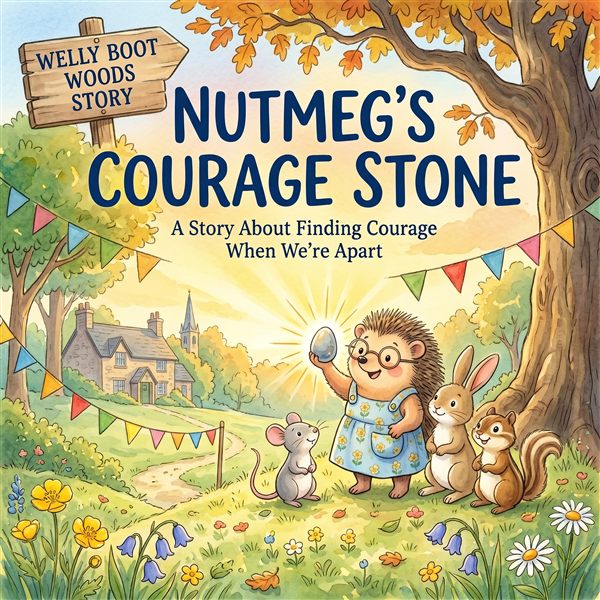
Nutmeg's Pocket Hug
Nutmeg the little hedgehog feels wobbly about stepping out into the bustling woodland clearing. With Ruby Robin's help and a smooth "Pocket Hug" pebble tucked in her pocket, she discovers she can carry her family's love wherever she goes. Ideal for starting nursery or Reception.
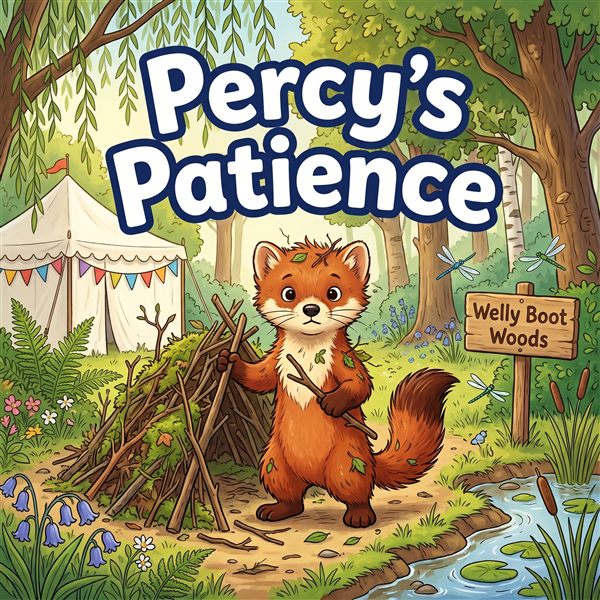
Percy's Patience
Percy the Pine Marten rushes to build the grandest woodland den, but gets frustrated when his early attempts tumble down! A heartwarming rhyming story that teaches young children patience, resilience, and that mistakes are just practice.
7. Frequently Asked Questions
A realistic UK school readiness checklist covers two halves: 5 Practical Reception Class Skills (toilet independence, putting on their coat and shoes, using cutlery and opening their water bottle, recognising their first name on a coat peg, and tidying away toys) and 5 Emotional Readiness Skills (separating confidently at the door, asking an adult for help, coping when plans change, tolerating frustration when learning something new, and taking turns with classmates).
No. Under the UK Early Years Foundation Stage (EYFS) framework, children do not need to read, write, or do formal maths before starting Reception. Reception teachers teach phonics and number skills from scratch. Independence with self-care and emotional confidence matter infinitely more.
Start building confidence before reception by walking past the school gates on quiet weekends, practising opening their new school bag and lunchbox at home, reading gentle transition stories like Nutmeg's Pocket Hug, and giving them a smooth "Pocket Hug" pebble to keep in their uniform pocket so they can physically feel your love during the school day.
Normalise frustration as part of practice before school starts. Read stories like Percy's Patience and introduce the mantra "Mistakes are just practice!" Praise their effort rather than the end product so they feel safe to try again without tears.
In England, the national deadline to apply for a primary school Reception place is 15 January (for children starting in September following their 4th birthday). Applications must be submitted via your home local council portal, and families receive their school place offer on National Offer Day on 16 April.