
1. What Is a Key Person? (The EYFS Attachment Anchor)
When you leave your two- or three-year-old in a lively nursery room buzzing with ten, twenty, or thirty children, the sensory input can easily overwhelm a sensitive temperament. That is why under the UK Early Years Foundation Stage (EYFS) statutory framework, every registered nursery, preschool, and childminding setting is legally required to assign a named Key Person to every single child.
A Key Person is far more than someone who ticks a register or changes nappies. In early childhood developmental psychology, they serve as your child's secondary attachment figure—a secure emotional harbour when big feelings crash in and parents are not in the room.
The Neuroscience of Secondary Attachment
Pioneering attachment theorists like John Bowlby and early years researcher Elfer, Goldschmied & Selleck proved that young brains cannot learn, explore, or build peer relationships until their social nervous system feels fundamentally safe.
When a sensitive toddler enters nursery, their cortisol (stress hormone) spikes. Having a designated adult who learns their exact rhythm, validates their tears, and responds predictably acts as an external emotional regulator. A strong key person bond does not replace a parent—it creates a safe emotional springboard so your child can explore the world with confidence.
When parents and key workers work as an active, communicative team, the child receives a singular, reassuring message: "The adults who love me at home trust the adults who care for me here. I am safe."
2. What to Put on the "All About Me" Sheet (The Goldmine Details)
Before settling-in sessions begin, most nurseries hand parents an intake questionnaire or "All About Me" booklet. Too often, parents fill these out hurriedly with standard bullet points: "Likes bananas, enjoys Peppa Pig, sleeps with a bunny."
While snack preferences matter, early years practitioners are desperate for the emotional goldmine details that help them de-escalate tears and connect on Day One. Here is what truly helps your child's key person:
The Emotional "All About Me" Blueprint
- Subtle Pre-Meltdown Signals: What does your child do before they start crying? Do they go quiet and stare into space? Do they twirl their hair, tuck their thumbs into their fists, or retreat behind a curtain?
- Home Calming Scripts: What exact phrases soothe them at home? Write them down verbatim (e.g. "We say 'smell the flower, blow the dandelion' like Ruby Robin" or "We say 'I've got you, you are safe'").
- Sensory Soothers: Does your child decompress with tactile pressure, running water, turning pages of a book in a quiet corner, or listening to rhythmic music?
- Specific Passions: Instead of "cars", write: "Obsessed with green tractors and spinning vehicle wheels. Hands-on construction will immediately grab his focus if he looks wobbled."
- Family Nicknames & Pet Names: The names of siblings, beloved grandparents, and pets (e.g. "Calls his grandma 'Nanna B' and his cat 'Milo'"). These provide instant conversation bridges during quiet moments.
3. 5 Practical Tips to Help a Sensitive Toddler Bond
If your little one is naturally shy, slow-to-warm-up, or prone to clinging at nursery doors, building that secondary attachment requires intentional scaffolding. Here are 5 battle-tested habits from early years practitioners and parents:
Tip 1: Put the Key Person's Photo on Your Fridge at Home
Abstract names mean little to a two-year-old. Before their first full week, ask the nursery for a small printed photo of their key person, or take a quick snap on your phone during your settling visit. Stick it on the fridge at toddler eye level.
Point to it casually during breakfast: "Look, there's Sarah! I wonder what story Sarah will read in the book corner today? Sarah told me she loves making playdough cakes just like you do." By familiarising their face and name in the warmth of home, the key person ceases to be a stranger when the nursery door opens.
Tip 2: The "Morning Handover Treasure" Trick
On the walk or drive to nursery, give your child a tiny mission: find a smooth pebble, a yellow autumn leaf, or a fallen twig. Tell them: "This is your morning treasure. When we arrive, let's see if we can show it to Sarah together."
This simple sensory mission shifts their brain from anticipatory drop-off panic into an active task. Handing the treasure over gives the child and key person an instant, positive point of connection that breaks the tension.
Tip 3: Share Weekend Snippets at Monday Morning Drop-Off
Monday mornings are notoriously difficult after two days of family closeness. Give your key worker a 10-second cheat code at the door: "Leo went to the duck pond on Saturday and saw a tiny duckling splash in the mud." That single sentence arms the key worker with a direct emotional key to unlock conversation if tears emerge later in the morning.
Tip 4: Sync Your Home Routine with Nursery Milestones
Young toddlers have no concept of hours on a clock. Telling a three-year-old "I'll pick you up at 1:00 PM" feels abstract and disorienting. Key persons structure their day around sensory rhythm: morning carpet time, outdoor play, snack time, lunch, and quiet rest.
Find out the nursery schedule and mirror that language at home: "Mummy/Daddy will be waiting right outside the door just after afternoon fruit time." When the key person serves afternoon fruit, your child knows with absolute certainty that reunion is near.
Tip 5: Model Trust in Front of Your Child
Toddlers are exquisite social decoders. If you stand at the nursery door looking tense, apologetic, or tearful, your child's nervous system concludes: "Mummy/Daddy looks worried, so this room must not be safe."
Smile warmly at the key worker, greet them by name, and display relaxed posture. When your toddler sees you treat their key worker as a trusted, welcome friend, their brain receives the social green light to relax.
From the Early Years Classroom
"I read this book with 3-year-olds who are frequently not invested in an entire story, but this one held their attention."
— Mrs Deborah Bowring, Early Years Practitioner
4. The 3-Way Morning Handover at the Door
The physical geometry of drop-off matters immensely. Too often, drop-offs turn into a clumsy tug-of-war where a weeping child is peeled off a parent's leg or passed over like an awkward parcel. Instead, practice the Triangle of Connection:
- Crouch Down to Toddler Level: Keep your body facing both your child and their key worker in an open triangle. Avoid standing tall and talking over their head.
- Acknowledge the Big Feeling: If tears start, don't dismiss them with "You're okay, big boys don't cry." Validate the emotional reality: "It's hard to say goodbye. You want to stay with Mummy, and that's okay. But you are safe with Sarah."
- The Confident Hand-to-Hand Bridge: Gently place your toddler's hand into the key person's welcoming hand, or encourage them into the room toward a pre-set activity they love (such as water play or train tracks).
- The Clear, Predictable Sign-Off: Deliver your family's signature goodbye phrase: "A big squeeze, a little kiss, and I'll see you after afternoon snack. I always come back." Then turn and walk away with purposeful confidence. Never sneak away!
5. Using the "Pocket Hug" Pebble as an Attachment Bridge
In our fourth woodland storybook, Nutmeg's Pocket Hug, shy little Nutmeg the Hedgehog feels an overwhelming squeeze in her chest at the thought of leaving her cosy burrow for the Great Forest Gathering. She doesn't want to try, and her glasses slip down with worry.
Her mother doesn't force her or tell her to "cheer up". Instead, she teaches her the secret of the Courage Stone: a smooth grey pebble that holds a mother's hug, so Nutmeg can feel connected wherever she goes.
You can turn this exact story into a shared tool with your child's key person:
The Key Person "Pocket Hug" Handshake
- Read Nutmeg's Pocket Hug together at bedtime for several nights leading up to nursery.
- Find a smooth, flat pebble together and tuck it into your child's cardigan, coat, or pinafore pocket.
- On the first morning, introduce the stone to your key worker together: "Sarah, look! Leo has his Courage Stone in his left pocket, just like Nutmeg."
- Tell the key worker: "If Leo feels a wobble during story time, you can ask him: 'Shall we check how warm your pocket hug is feeling?'"
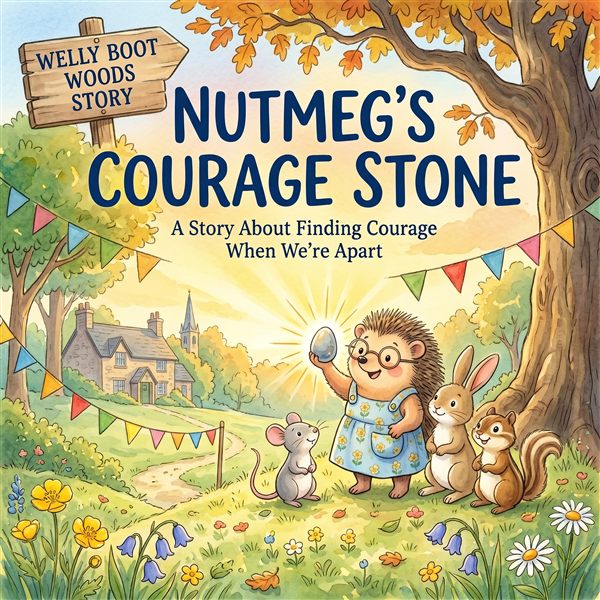
Nutmeg's Pocket Hug
Nutmeg the little hedgehog has a soft tummy, round reading glasses, and a big fear of leaving her cosy burrow for the Great Forest Gathering. With a smooth grey Courage Stone and gentle encouragement from woodland friends, she discovers that love and bravery fit right inside your pocket.
6. What If My Toddler Won't Warm Up to Their Key Worker?
Every parent's deepest worry is seeing their toddler shrink away from their assigned key worker week after week. If your child has been attending for four or five weeks and still refuses eye contact, cries inconsolably when approached, or will only accept comfort from another staff member, here is a calm action plan:
- Look at the Broader Context: How does your child behave 15 minutes after you leave? Most children who scream at the door settle into calm, creative play moments later. Ask staff to share a quick photo or written note via your nursery app showing your child engaged.
- Notice Natural Chemistry: Sometimes a child naturally gravitated toward a different practitioner during free play—perhaps a calmer room assistant whose quiet demeanor feels safer to a cautious toddler. In the EYFS framework, this is completely normal.
- Request a Gentle 10-Minute Collaborative Catch-Up: Speak to the room leader or nursery manager warmly: "Leo is still finding drop-offs really tough and hasn't quite clicked with Sarah yet. Could we have a quick 10-minute chat to align on what calming strategies are working best?" Early years professionals appreciate proactive, collaborative parents. If another staff member has naturally bonded with your child, nurseries are usually very willing to switch the designated key person pairing.
7. Frequently Asked Questions
The Room Leader oversees the overall room environment, daily curriculum planning, safety, and staff coordination. Your child's Key Person is the individual practitioner specifically designated to observe your child's developmental progress, provide primary emotional comfort during routines, handle personal care, and serve as your first point of daily communication.
For most children aged 2 to 4 attending two or three days a week, establishing a secure secondary attachment bond typically takes between 3 and 6 weeks. Children attending fewer sessions per week may take a little longer due to the spacing between visits.
Yes. Early years settings understand that personalities and attachments are deeply individual. If your child naturally bonds with a different member of the room team during free play, nurseries are accustomed to swapping key person pairings to support the child's emotional wellbeing.
Temporary regression is very common when a primary or secondary attachment figure is absent. Prepare your child in advance by talking about their key person's holiday and pointing out their 'buddy' key worker. Reinforce the Pocket Hug stone ritual so they have a continuous physical anchor.