
1. When Do Toddlers Start Getting Afraid of the Dark? (And Signs to Watch For)
Many parents are puzzled when a child who slept soundly in a pitch-black room as a baby suddenly starts protesting when the curtains close. So when do toddlers start getting afraid of the dark? Most children develop their first nighttime fears between ages 2 and 3 (frequently peaking between 2.5 and 4 years old). Far from being a setback, this is actually a milestone of healthy brain growth.
A Growing Imagination
Between ages 2 and 5, a child's creative imagination blossoms rapidly. However, the ability to distinguish between "what I can imagine" and "what is actually real" develops much later.
During the day, busy visual input keeps their mind anchored. At night, in the quiet stillness, their developing brain fills in the blank shadows with their own vivid imagination.
4 Common Signs a Toddler Is Afraid of the Dark
Because a two or three-year-old rarely has the vocabulary to say "I am experiencing nighttime anxiety," look out for these subtle signs a toddler is afraid of the dark:
- Sudden Bedtime Stalling: Repeatedly asking for one more sip of water, another trip to the toilet, or extra curtain adjustments the moment you reach for the light switch.
- Door-Closing Panic: Becoming distressed if the bedroom door is pulled shut or if the hallway light is turned off.
- Shadow Fixation: Pointing or staring anxiously at a dressing gown on the back of the door, curtains moving above a radiator, or a pile of toys in the corner.
- Physical Clinging at Lights-Out: Appearing completely relaxed during bath and story time, only to cling tightly when it is time to lie down in the dim room.
Dismissing the fear with phrases like "Don't be silly, there's nothing there" often leaves a toddler feeling misunderstood. Instead, acknowledging the feeling while changing how they view the darkness builds genuine nighttime confidence.
2. Tobias Toad's "Starlight Shift" Technique
In Let's All Go Camping, Finnegan Fox loves pitching his tent in the sunshine, but when night falls over Welly Boot Woods, the rustling leaves and long shadows make him want to hide. Wise old Tobias Toad teaches Finnegan a gentle secret: the darker the night, the brighter the stars shine.
How to Practice the Starlight Shift at Home
- Explore the Shadows Together: Before getting into bed, dim the lights and take a "Flashlight Safari" around the room. Show how a coat on a hook or a teddy bear on a shelf makes a funny shadow puppet.
- Look for the Nighttime Helpers: Point out the comforting things that only appear when the room is dark—like glow-in-the-dark ceiling stars, the moon outside the window, or the warm amber glow of their nightlight.
- Use Tobias Toad's Whisper: As you tuck them in, repeat the calming phrase: "The night is just a cozy blanket for the woods, so the stars can come out to play."
3. The 3-Part "Cozy Burrow" Wind-Down
Toddlers transition into sleep best when bedtime feels like entering a safe woodland burrow rather than being sent away from family fun:
- Swap Overhead Lights for Warm Amber 30 Minutes Early: Bright white ceiling lights signal daytime alertness. Switching to a soft bedside lamp during story time gently cues natural sleep hormones.
- Ruby Robin's Three Sleepy Breaths: Lying under the covers together, place a favourite soft toy on your child's tummy and watch it rise and fall slowly for three deep breaths.
- Leave a Predictable Comfort Cue: Whether it is a softly glowing nightlight or leaving the bedroom door cracked a "badger's paw" wide, keep the environment identical between when they fall asleep and if they wake at 2:00 AM.
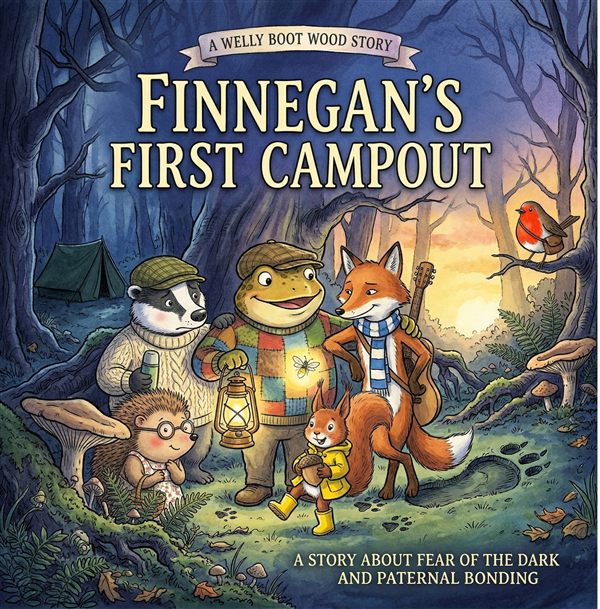
Let's All Go Camping
Finnegan Fox is thrilled for the big woodland campout—until the sun dips below the trees and spooky shadows appear! With the gentle guidance of Tobias Toad, Finnegan discovers that the dark isn't something to fear when you look up at the twinkling stars.
5. Frequently Asked Questions
Most toddlers start getting afraid of the dark between ages 2 and 3 (often peaking around 2.5 to 4 years old). At this stage, their creative imagination undergoes a massive developmental leap, while their ability to separate fantasy from reality is still maturing—meaning ordinary bedroom shadows can suddenly look spooky once the lights go out.
Because young toddlers cannot always say "I'm scared of the dark," fear of the dark often shows up as bedtime stalling (asking for endless sips of water or extra hugs), crying when the bedroom door is closed, staring intently at corners, curtains, or dressing gown shadows, or waking suddenly at night insisting the big light stays on.
Child psychologists often advise caution with "monster spray" because it can accidentally validate the idea that monsters are real and need to be warded off. Instead, showing your child how normal daytime objects cast shadows ("Look, that shadow is just your stack of books!") builds lasting reassurance.
A warm amber, peach, or soft red-toned light placed low to the floor is ideal. Blue or bright white nightlights can interfere with melatonin and cast sharper shadows across walls.