
1. Why Shy & Sensitive Toddlers Freeze at Playgroup
When a toddler hides behind your knees at soft play or watches nursery circle time silently from the edge of the mat, it is easy to worry they are "missing out" or struggle with confidence. Yet in most cases, your child is doing something smart and deeply protective: quietly scanning the environment until their nervous system feels safe.
Slow-to-Warm-Up Brains & Sensory Volume
Child development researchers identify roughly 15–20% of children as having a "slow-to-warm-up" or highly sensitive temperament. Their brains process sights, echoed hall noise, unexpected movement, and unfamiliar faces in much higher detail.
When we brightly say, "Go on! Go play with the other children!" and nudge them forward, their nervous system reads the sudden separation as a threat—causing them to cling tighter rather than explore.
It also helps to remember the normal stages of early childhood play recognised across UK Early Years Foundation Stage (EYFS) settings:
- Onlooker Play (18 months – 3 years): Watching other children from a safe spot is active social learning, not failure. Your child is studying the unwritten rules of the room before trying them out.
- Parallel Play (2 – 3.5 years): Sitting alongside another toddler playing with blocks without actually talking or sharing a storyline is completely normal and healthy.
- Associative & Cooperative Play (3.5 – 5 years): True back-and-forth games ("You be the shopkeeper, I'll buy apples") bloom naturally once a child feels safe in the room.
2. The 3-Step "Warm-Up" Strategy (No Pushing Required)
Just as we wouldn't throw a chilly swimmer into an unheated outdoor pool, a sensitive toddler needs time to adjust to the temperature of a busy playgroup. Try this gentle three-step sequence next time you walk through the door.
The 3-Step Playgroup Warm-Up
- Step 1 — Arrive 5 Minutes Early (The Quiet Scout): Whenever you can, arrive at stay-and-play or nursery right as the doors open. Walking into a room with two other children feels manageable; walking into a room with twenty shouting toddlers triggers instant overwhelm.
- Step 2 — Set Up "Base Camp" & Narrate: Sit quietly together near an inviting table (like playdough, sand, or wooden trains). Never force eye contact or push them off your lap. Simply become a calm sportscaster: "Look, that girl in the red jumper is squishing green playdough. Let's watch for a minute."
- Step 3 — Bridge Into Low-Pressure Parallel Play: Once their shoulders drop and they start pointing or reaching, sit side-by-side at a shared tray—not face-to-face. Offer a tiny, pressure-free bridge: "We have two rolling pins. Shall we keep one and put one in the middle in case someone needs it?"
If your child prefers to stay at Base Camp for the entire first session and only touches a single wooden animal in the final five minutes, celebrate that as a win. You taught their brain that playgroup is a safe, predictable place where nobody rushes them.
What Early Years Educators Say
"Very well received in my early years setting... I'm always on the look out for books to support extending understanding, flexibility and friendships."
— Jason G., Early Years Setting
3. Gentle Phrases That Replace the "Shy" Label
Toddlers listen closely to how we describe them to other adults. Repeatedly hearing "Oh, sorry, he's just really shy!" teaches a child that shyness is a fixed flaw they need to apologise for. Try these gentle swaps instead:
- Instead of: "Say hello! Don't be rude, wave to Mrs Patel!"
Try: "You can give a little wave with your eyebrows or your fingers when you're ready. I'll say good morning for both of us first." - Instead of: "She's really clingy around new people."
Try: "She's a thoughtful observer—she likes to take a cosy minute to check everything out before joining in." - Instead of: "Why didn't you play with anyone today?" (in the pushchair home)
Try: "What was the funniest or cosiest thing you spotted in the room today?"
When another well-meaning toddler runs right into your sensitive child's personal space, step in warmly as their gentle buffer: "Sam is just having a quiet look first! Let's show Sam the shiny fire engine from right here." Protecting their boundaries helps them trust that you have their back—which ironically makes them step out on their own much faster.
4. Picture Books for Quiet Hearts: Nutmeg & Finnegan
Sensitive toddlers rarely respond to pep talks about bravery, because pep talks feel like pressure. Instead, they learn best by seeing gentle characters just like them navigate busy rooms and new friendships safely.
In Nutmeg's Pocket Hug, quiet little Nutmeg the Hedgehog peeks out from behind ferns and feels overwhelmed when the woodland clearing gets crowded and loud. With a smooth grey Courage Stone tucked in her pinafore pocket—charged with a big hug from home—she discovers she can take small, brave steps into the group at her own pace.
And in Let's All Go Camping, newcomer Finnegan Fox—who recently moved to the woods from the city—discovers that even when you feel new, unsure, or wobbly in the shadows, friendly neighbours like Tobias Toad are ready to shine a warm lantern and welcome you into the circle.
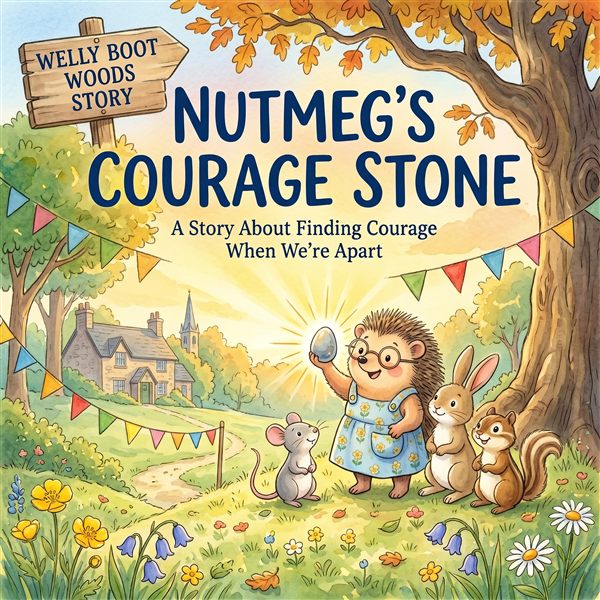
Nutmeg's Pocket Hug
Nutmeg the little hedgehog is a quiet, thoughtful observer who gets overwhelmed by big, noisy crowds. When Ruby Robin hands her a smooth grey Courage Stone charged with her family's love, Nutmeg finds the bravery to step into the bustling clearing.
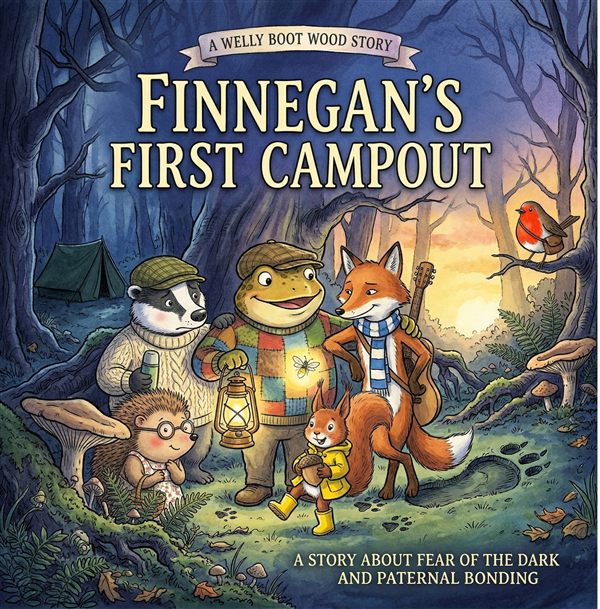
Let's All Go Camping
When city newcomer Finnegan Fox joins the woodland friends for a campout, shadows and unfamiliar noises feel daunting. With gentle reassurance and Tobias Toad's warm lantern, Finnegan discovers comfort, belonging, and stars shining overhead.
5. Frequently Asked Questions
Many toddlers have a slow-to-warm-up or highly sensitive temperament. Walking into a noisy church hall or unfamiliar nursery room floods their senses, so their nervous system uses you as a safe "Base Camp" until they have quietly mapped out the space and people.
Try to avoid using "shy" as a fixed label within earshot of your toddler. Instead, frame their caution positively: "She likes to take a cosy minute to watch and warm up first." This honours their temperament without making them feel something is wrong with them.
Between ages 2 and 3, parallel play—playing side-by-side with another child without directly interacting—is completely normal under UK EYFS milestones. True interactive and cooperative play with friends usually develops between 3 and 4 years old.
Nutmeg's Pocket Hug features Nutmeg the Hedgehog, a gentle, shy observer who feels overwhelmed by crowds until her tactile Courage Stone helps her take small brave steps. Let's All Go Camping also shows newcomer Finnegan Fox finding comfort and belonging alongside welcoming woodland friends.