
1. The Brain Science Behind the Swing: Why Toddlers Lash Out
When an adult feels annoyed, our prefrontal cortex—the logical, impulse-filtering part of the brain—puts on the brakes. We think: "I'm cross, but I won't throw my coffee cup across the desk."
In toddlers aged 18 months to 4 years old, that logical braking system is almost entirely under construction. When a toy is snatched, a sibling stands too close, or dinner is the wrong shape, their emotional smoke alarm (the amygdala) triggers an immediate rush of motor energy.
Huge Frustration + Zero Brain Brakes + Limited Words = Physical Action.
Hitting, biting, and throwing are not malicious choices; they are raw, unfiltered discharges of physical adrenaline.
Understanding this doesn't mean we tolerate hitting—quite the opposite! It frees us from taking it personally so we can intervene with calm, unshakeable authority.
2. The 3-Step Protocol: "Hold the Boundary, Co-Regulate the Storm"
When hands or teeth start flying, your toddler needs you to be their external nervous system. Here is the exact 3-step co-regulation sequence:
Block the Hand (Safety First)
Don't wait for the third strike. Physically step in, catch their wrist gently, or place your hand between their teeth and their sibling's arm.
"I won't let you hit. Hitting hurts."
Keep your tone flat, low, and neutral. No gasping, shouting, or emotional drama.Name the Giant Feeling Beneath
Acknowledge the impulse without approving the action. When toddlers feel understood, the adrenaline peak starts to subside.
"You were so furious that your tower fell down. You really wanted it tall."
Naming the emotion moves brain activity from the reactive amygdala to the linguistic cortex.Provide a Safe Physical Release
Adrenaline has to go somewhere. Telling a furious toddler to "just sit still" causes internal pressure to mount. Give their body an acceptable outlet.
"You cannot hit my body. If your hands need to be strong, you can push the wall or stomp your feet like Barnaby Badger."
Offer heavy work: pushing against a wall, squishing playdough, or stomping on the rug.3. Common Traps: Why Time-Outs and Yelling Escalate Hitting
When our child hurts someone, our parental instinct is often embarrassment or anger. However, three common reactions almost always prolong the hitting phase:
- The Threat of "Naughty Steps" or Isolation: Banishing a dysregulated two-year-old to a room or step floods them with separation distress. They don't reflect on their actions; they just feel terrified and rejected, making future meltdowns more explosive.
- Shouting "DON'T YOU DARE HIT!": Yelling adds your own adrenaline to their nervous system. If a child feels attacked, their amygdala stays in fight-or-flight mode.
- Biting or Hitting Back "To Show Them How It Feels": This teaches children the very lesson we want to avoid: that bigger, stronger people solve problems through physical force.
4. Woodland Story Reset: How Pip Calms Big Frustration in The Greatest of Races
During a red-faced meltdown, children cannot absorb rational lessons. The real learning happens later, during calm, connected moments—especially curled up with a bedtime story.
In The Greatest of Races (Book 3 of Welly Boot Woods), energetic Pip the Red Squirrel wants to win the woodland race so badly that she rushes ahead, yanking the three-legged race ribbon and tumbling into the mud with her partner Nutmeg the Hedgehog. Furious and embarrassed, Pip sits in the dirt with her arms crossed tight—until Ruby the Robin flutters down and teaches her the calming "Robin's Breath". When speedy Humphrey the Hare gets tangled in a thorny bramble bush ahead, Pip and Nutmeg choose to stop, untangle their friend, and cross the line together as a team.
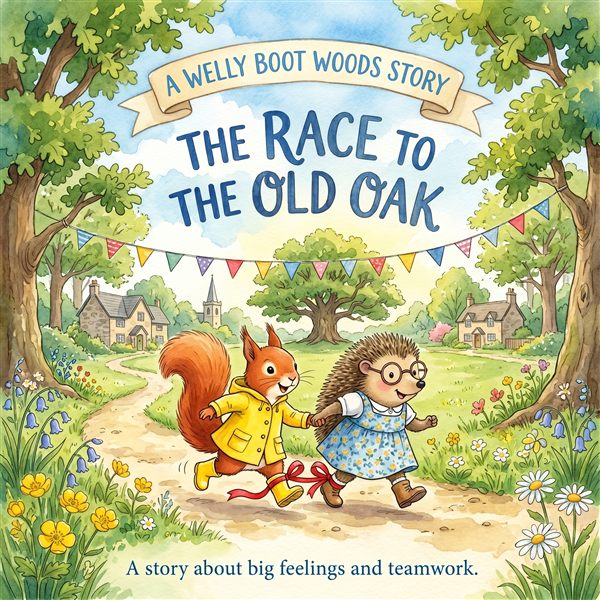
The Greatest of Races (The Race to the Old Oak)
A gentle rhyming story for little badgers and squirrels learning to navigate frustration, sharing, and gentle teamwork.
Join Pip the Red Squirrel, Humphrey the Hare, and Nutmeg as they discover that when tempers flare and races get tricky, listening to friends and using gentle paws is what true champions do.
5. 4 Daily Habits to Prevent Physical Overwhelm Before it Starts
If your child is going through a phase of frequent hitting or throwing, look at their daily sensory and emotional landscape:
1. Daily "Heavy Work" Sensory Play
Proprioceptive input calms the nervous system. Have your toddler push a laundry basket full of books, carry small watering cans in the garden, or climb pillow mountains before dinner.
2. Notice "Gentle Paws" When Things Go Well
Don't only pay attention when hands strike. When they hand you a crayon or stroke the family cat softly, whisper: "Look at your gentle paws. That was so kind and careful."
3. Watch for the HALT Triggers
90% of toddler aggression occurs when they are Hungry, Anxious, Lonely, or Tired. Pre-empting hunger with a 4pm snack stops many teatime block-throwing incidents before they start.
4. Practice the Woodland Calming Breath
Teach Ruby Robin's deep belly breath during calm playtime: "Sniff the sweet woodland pinecone... blow the autumn leaf away!" When tension rises, a familiar ritual helps them release tight chest muscles.
6. Frequently Asked Questions
Yes, completely normal. Toddlers have an underdeveloped prefrontal cortex and limited vocabulary. When a rush of frustration hits, their body reacts physically before their logical brain can intervene. It is a stage of emotional development, not a moral failure or a sign of an aggressive personality.
Toddler laughter during or after hitting is almost never malice—it is a nervous coping mechanism caused by emotional overload or checking for your reaction. Keep your face completely neutral and calm: "This isn't silly. Hitting hurts. I am keeping our bodies safe." Avoid smiling or over-reacting.
Forcing an insincere, tearful "sorry" when a toddler is still flooded with adrenaline teaches rote compliance rather than genuine empathy. Tend to the hurt person first ("Are you okay? Let me get you some ice"), then once your toddler is calm, model repair: "Let's check on your brother together. Would he like a gentle pat or a tissue?"