
1. Why Toddlers Shout "Mine!" (It's Not Selfishness)
When a 2 or 3-year-old grabs a toy from a playmate or refuses to share their bucket in the sandpit, adults often worry their child is becoming bossy or unkind. In reality, developmental psychologists view the "Mine!" stage as a completely healthy step in early brain growth.
Parallel Play & Impulse Control
Before age 3.5, children play primarily in parallel play—playing alongside peers rather than cooperatively with them. At this stage, an object a toddler is looking at feels like an extension of their own thoughts.
Because impulse control in the prefrontal cortex is still forming, when a toddler sees an exciting toy, the urge to touch it fires milliseconds before the verbal brain can ask, "Can I have a turn?"
When adults jump in and force a toddler to surrender a toy they just picked up ("Give it to your brother right now, you have to share!"), the child learns that other children are a threat to their play—which actually causes more clutching and snatching next time.
2. The "When You're Done" Turn-Taking Method
Most UK nursery and Montessori settings have moved away from rigid 2-minute egg timers Toward autonomous turn-taking. Instead of interrupting a child mid-play, you teach both children the rhythm of waiting and handing over.
The 3-Step Playgroup Script
- Block the Snatch Warmly: Place a calm hand on the toy and get down to eye level: "Oops! Barnaby's hands are still using the digger. It's Barnaby's turn right now, and your turn is next."
- Empower the Playing Child: Turn to the child holding the toy and ask: "Barnaby, Pip would love a turn when you are all finished. Will you bring the digger straight to Pip when your turn is done?" (Nine times out of ten, once a toddler feels their turn is protected, they hand the toy over voluntarily within two minutes!)
- Bridge the Wait with Connection: While waiting, help your child practice Ruby Robin's deep breath or count three woodland treasures in the room until the handover arrives.
3. Shifting from Competition to Teamwork
In The Greatest of Races, energetic Pip Red Squirrel is desperate to win the Woodland Acorn Dash, while speedy Humphrey Hare boasts that no one can catch him. When Pip gets frustrated with her slower partner Nutmeg the Hedgehog—and Humphrey gets tangled in thorny brambles—the friends discover that finishing together is far more joyful than winning alone.
Early Years Practitioner Tip
"Very well received in my early years setting... I'm always on the look out for books to support extending understanding, flexibility and friendships."
— Jason G., Early Years Setting
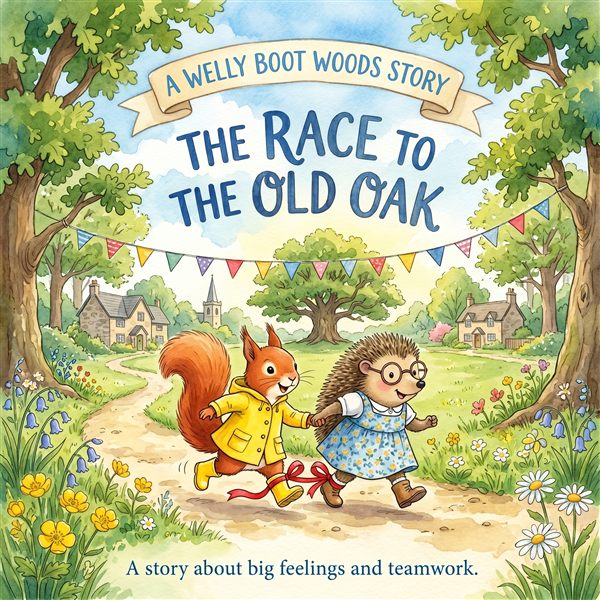
The Greatest of Races
It's race day in Welly Boot Woods! Pip Red Squirrel wants to speed ahead, and Humphrey Hare is sure he'll win the golden acorn—until a bramble bush changes everything. A lively, rhyming woodland adventure that teaches children aged 2–6 about empathy, patience with friends, and the magic of teamwork.
5. Frequently Asked Questions
No! Even adults don't share their wedding ring or phone with guests. Before a playdate, let your toddler choose 2 or 3 special toys to tuck safely away in their bedroom. Knowing their most cherished items are safe makes them much more generous with the remaining toys.
Validate the sting first ("It feels tough when you really wanted to come first!"), then use Pip and Humphrey's story to celebrate the fun of playing together ("Who had the biggest jump over the cushion? Let's do a team relay where we all race the clock together!").