
1. Why Losing Feels Like Danger to a 3–5 Year Old
When a four-year-old sweeps the counters off the table or bursts into tears because they didn't reach the gate first, it is easy to worry they are becoming a "bad sport." In reality, their reaction comes down to two normal developmental stages:
- Wishes vs. Reality Blur Together: Between ages 3 and 5, children want so badly to win that their brain treats "I want to win" as a promise that they will win. When someone else wins, it feels like a sudden shock.
- Identity Is Tied to the Outcome: Young children don't yet have the perspective to think, "I lost this round of Snap, but I'm still great at climbing trees." In that moment, losing the game feels like failing altogether.
Why "It's Just a Game!" Makes It Worse
Telling an upset child "Don't be silly, it's only a game!" makes them feel misunderstood on top of disappointed. Naming the sting first—"Oof, you really wanted to land on that ladder! Losing feels rubbish sometimes"—helps their nervous system settle in seconds.
2. Should You Let Your Toddler Win? (The 50/50 Rule)
If you win every single time, a young child quickly decides games are pointless and refuses to play. On the other hand, if you let them win 100% of the time, they get a nasty shock the first time they play with friends at nursery or Reception.
The sweet spot at home is **modelling how to lose cheerfully first**. When your child beats you at a short game, exaggerate your own playful reaction:
"Aw, acorns! My counter fell right down the snake! Look how fast you zoomed to the finish. High five, winner—shall we shuffle for round two?"
Children learn how to lose by watching the adults they love lose without losing their temper.
3. 3 Steps to Teach Gentle Sportsmanship at Home
The "Woodland Finish Line" Routine
- Preview the End Before You Start: Before rolling the first dice, ask casually: "Only one counter gets to the top first. What can we say if the other person wins today?" Practising a silly phrase like "Bouncing badgers, good game!" while calm gives them a script when emotions spike.
- Celebrate the Best Moment, Not Just First Place: At the end of every game, ask: "What was the funniest part of that race?" Shifting attention from the trophy to the giggles along the way rewires how they view play.
- Play "Team vs. the Clock" Games Too: Mix competitive games with cooperative challenges—like tidying all the blocks into the basket before a 2-minute sand timer runs out—so everyone celebrates together.
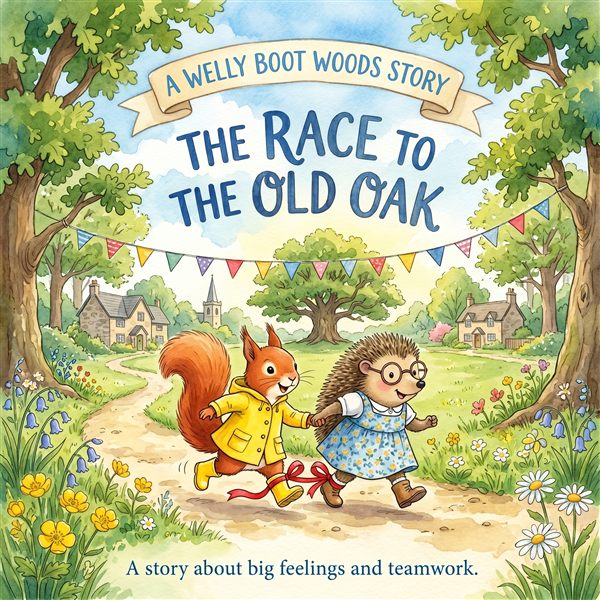
The Greatest of Races
Pip the Red Squirrel and Humphrey Hare are determined to win the Great Woodland Dash. Along the trail, they discover that pausing to help a stuck friend and crossing the line together feels far better than winning all alone.