
1. Why Toddlers Lose the Plot on Rainy Days (The Sensory Bottleneck)
If you have ever been stuck inside with two children under five during a British downpour, you know the exact moment cabin fever strikes. By 10:15 AM, cushions are flying, someone is sitting on their sibling, and your living room looks as though a family of badgers has rummaged through every toy box.
Why do toddlers become so wired when rain cancels a trip to the park? The answer isn't "naughtiness"—it is a sensory bottleneck.
The Science of Proprioception ("Heavy Work")
In early years occupational therapy, young children regulate their nervous systems through two hidden sensory systems: the vestibular system (spinning, climbing, balancing) and the proprioceptive system ("heavy work" where muscles and joints push, pull, lift, and squeeze against resistance).
When toddlers play outdoors, they get heavy work naturally by stomping in wellies, climbing playground steps, and pushing scooters up hills. When trapped indoors, they try to feed that starving proprioceptive system by crashing into the sofa or wrestling. If you give them intentional indoor heavy work first, their brains calm down within 15 minutes.
2. Part 1: 4 "Heavy Work" Activities to Burn Cabin Fever Fast
Before you even think about pulling out colouring pencils or puzzles on a rainy morning, start with 15 to 20 minutes of resistance play to drain that fizzy physical energy:
1. The Woodland Delivery Lorry (Laundry Basket Push)
Grab a plastic laundry basket and load it with four or five heavy hardback books or a couple of sofa cushions so it has real weight. Tell your toddler they are Barnaby Badger's Woodland Delivery Driver and need to push supplies across the carpet from the "Old Oak Tree" (the hallway) to "Squirrel Hollow" (the sofa) to deliver soft toys.
Why it works: Pushing a weighted basket on carpet engages the core, shoulders, and legs in deep proprioceptive work—instantly grounding a hyperactive nervous system.
2. "Don't Step in the Muddy Puddle!" (Cushion Stepping Stones)
Take every cushion off your sofa, plus a couple of folded bath towels, and scatter them across the living room floor. Announce that the carpet has turned into a giant rainy-day puddle. Challenge your toddler to leap from stone to stone to rescue three stranded teddy bears and carry them back to dry land.
Level up for 3 and 4-year-olds: Call out different woodland movements for each crossing: "Cross the puddles like a hopping frog like Tobias Toad! Now tiptoe slowly like Nutmeg the Hedgehog!"
3. The "Badger Burrow Sausage Roll" (Blanket Squishes)
Lay a cot blanket or throw flat on the rug. Have your toddler lie at one edge with their head sticking out, and gently roll them up inside the blanket like a cosy woodland sleeping bag. Then play "Woodland Baker"—gently press firm, steady two-handed squishes down their back, arms, and legs while asking: "Are you a bumpy pinecone roll or a smooth acorn roll?"
Why it works: Deep tactile pressure lowers cortisol and switches a wild, dysregulated toddler into giggles and calm.
4. The Masking Tape Acorn Rescue Track
If you have a roll of low-tack painter's tape or paper masking tape, lay three 2-metre strips down your hallway: one straight line, one zig-zag, and one dashed jumping line. Put a bowl of socks rolled into balls ("acorns") at one end and an empty saucepan at the other. Your child has to balance along the tape line carrying one acorn at a time—on their head, between their knees, or on a wooden spoon—to fill Pip Red Squirrel's winter pantry.
3. Part 2: 3 Zero-Mess Imaginative & Water Rescue Stations
Once the big physical energy is spent, transition into tactile, hands-on focus using warm water and kitchen items:
5. The "Muddy Woodland Animal" Car Wash
Nothing resets a grumpy toddler faster than warm water. Lay an old bath towel on the kitchen floor (or stand your toddler safely on a learning tower at the kitchen sink). Fill a washing-up bowl with two inches of warm, bubbly water, hand them an old toothbrush and a sponge, and drop in all their plastic animals, dinosaurs, or Duplo bricks.
The Story Hook: "Oh no! After the big rainstorm in Welly Boot Woods, all the animals got covered in imaginary mud! Can you scrub behind their ears and dry them on the towel station?" Easily buys 25 minutes of absorbed peace while you drink a hot cup of tea.
6. The Muffin Tin "Squirrel Foraging" Sort
Hand your toddler an empty 6-cup or 12-cup metal muffin tin, a wooden spoon, and a bowl containing a mix of large child-safe household items (e.g., red, yellow, and blue Duplo bricks, large pom-poms, or colourful Mega Bloks). Challenge them to sort the "berries and nuts" by colour into the muffin cups so Pip Red Squirrel's picnic basket stays organised.
7. The Colander Pipe-Cleaner "Hedgehog"
Turn a metal kitchen colander upside down on the table and hand your toddler a handful of pipe cleaners (or dried spaghetti strands for older preschoolers under supervision). Show them how to thread the spikes into the colander holes to give Nutmeg the Hedgehog her prickles back.
From Early Years Educators
"Very well received in my early years setting... I'm always on the look out for books to support extending understanding, flexibility and friendships."
— Jason G., Early Years Setting
4. Part 3: 3 "Cosy Burrow" Indoor Picnic & Wind-Down Games
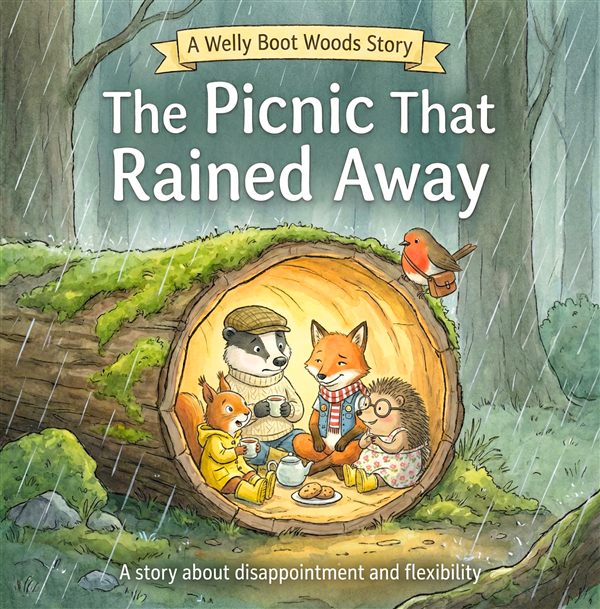
In our very first picture book, The Picnic that Rained Away, Barnaby Badger and Pip Red Squirrel have their hearts set on an outdoor picnic—until heavy rain clouds ruin their Plan A. Instead of letting the afternoon end in tears, they discover the magic of a Plan B Indoor Burrow Picnic.
Here is how to turn lunch or afternoon snack into the highlight of a rainy day:
8. The Two-Chair Blanket Burrow & Torchlight Picnic
Drape a single bedsheet over two dining chairs or the corner of the sofa and weigh the corners down with heavy books. Spread a picnic rug underneath, pile in cushions, and hand your toddler a small household torch. Serve their normal lunch (sandwiches cut into triangles, cucumber coins, and apple slices) in a basket or lunchbox inside the burrow.
Eating a cheese sandwich under a dining table by torchlight feels ten times more magical to a three-year-old than eating at the kitchen table.
9. The Indoor "Woodland Explorer" Scavenger Hunt
You don't need a forest to run a scavenger hunt. Give your toddler a small bag or bucket and call out one sensory mission at a time around the house:
- "Find something as red as Ruby Robin's tummy!"
- "Find something as soft as Barnaby Badger's blanket!"
- "Find something round like Nutmeg's pebble!"
- "Find something that makes a crinkly leaf sound!"
10. Ruby Robin's Rainy Window Breathing Game
When the afternoon wind-down arrives, sit together inside your blanket den watching the raindrops race down the windowpane. Practice Ruby Robin's Calming Breath: breathe in slowly through the nose for 4 seconds as if smelling a wet woodland flower, and blow out gently through the mouth as if blowing a fluffy dandelion clock across the room.
The Picnic that Rained Away
Barnaby Badger has planned the ultimate sunny woodland picnic with Pip Red Squirrel and their friends—until dark rainclouds wash Plan A away. A gentle, rhyming story that teaches toddlers how to navigate big disappointment, jump in muddy puddles, and turn a rainy day into the cosiest indoor burrow picnic ever.
6. Frequently Asked Questions
Toddlers aged 2 to 4 have a strong biological drive for vestibular (movement and balance) and proprioceptive ('heavy muscle work') sensory input. When rain keeps them inside a small living room, their nervous system becomes under-stimulated in body movement and over-stimulated by indoor noise, leading to sofa-bouncing, sibling squabbles, and meltdowns.
Focus on 'heavy work' activities that use large muscle groups safely indoors: pushing a weighted laundry basket across the rug, doing an animal walk obstacle course (bear crawls, frog jumps, badger waddles), rolling your toddler up in a blanket 'sausage roll', and playing 'Don't Step in the Muddy Puddle' with sofa cushions.
Follow the sensory funnel: start with 15 minutes of high-energy gross motor play, move into a warm water sensory station (such as washing plastic toy animals in a washing-up bowl with a toothbrush), and finish inside a dimmed blanket den with a snack and a rhyming storybook like The Picnic that Rained Away.