
Calming the Morning Rush: 5 Gentle Steps to Stop Toddler Meltdowns Before Nursery & School
It is 7:48 AM. Your coat is on, the car keys are in your pocket, and your three-year-old is suddenly curled into a silent ball under the kitchen table refusing to put on their left shoe. If every morning feels like an Olympic sprint where everyone ends up in tears, you are not failing—you are encountering the natural clash between adult schedules and early years neuroscience.
1. Why Toddlers Resist the Morning Rush
Adults live by the clock. We think in sequential increments: breakfast at 7:15, dressed by 7:30, out the door by 7:45. Toddlers, however, live entirely in the sensory present. They do not understand the consequences of being 10 minutes late for work or registration.
When we suddenly inject urgency—raising our voice, tapping our watches, or hurrying little feet—a young child does not interpret it as efficient productivity. Their developing amygdala interprets parental urgency as a rupture in safety.
The Brain Science of Morning Resistance
A toddler's prefrontal cortex—the part of the brain responsible for task-switching, impulse control, and forward planning—is still under active construction. When parents rush, cortisol spikes, triggering the toddler's fight-flight-freeze instinct. The refusal to put on socks is rarely defiance; it is a neurological freeze response to overwhelming transition pressure.
2. Step 1: Connect Before You Direct
The single most effective shift you can make to your morning routine costs zero money and requires just five minutes: wake up five minutes earlier to do absolutely nothing except cuddle.
Before you mention trousers, cereal, toothbrushes, or nursery bags, climb into their bed or pull them onto your lap. Whisper a good morning, stroke their back, or read two pages of a gentle story. When a child starts the day with an overflowing "attachment cup", their willingness to cooperate with subsequent requests increases threefold.
"Nutmeg's story has completely changed our morning drop-offs. Archie keeps his little pebble in his pocket and says he feels brave now."
3. Step 2 & 3: Ending Clothes & Shoe Battles
The hallway threshold is usually where morning routines stall. The secret to smooth dressing is removing power struggles before they ignite.
Step 2: The Two-Choice Illusion of Autonomy
Between the ages of two and four, children experience a powerful biological urge to assert personal control over their bodies. Telling a three-year-old "Put your blue trousers on right now" invites an automatic reflexive "NO!".
Instead, pre-select two options the night before and lay them out:
- "Would you like to wear your green squirrel socks or the red stripe socks today?"
- "Do you want to put your jumper on while sitting on the sofa or hopping on one leg?"
In both cases, the non-negotiable outcome (getting dressed) happens, but the child retains dignified ownership of the choice.
Step 3: Gamify the Hallway Transition
Children run on play, not duty. If you say "Put your wellies on so we can go to nursery", it feels like work. If you say "Can we stomp into our wellies like Barnaby Badger on his way to an adventure?", you activate their imagination and natural motor drive.
The 3-Second "Shoe Runway" Game
Line up your child's shoes facing the front door. Announce that the shoes are 'woodland racing cars' waiting for their drivers. Count down: "Engine starts... 3, 2, 1, zoom your feet in!". Shifting the frame from obedience to play eliminates 90% of front-door resistance.
4. Step 4 & 5: The Pocket Hug & Plan B
Even with the best routines, mornings can wobble. Having an emotional bridge and a reset protocol ensures minor delays do not become full-blown meltdowns.
Step 4: The "Pocket Hug" Coat Transfer
Often, resistance at the front door is not about shoes at all—it is the sudden realisation that leaving the house means separating from you. In our storybook Nutmeg's Pocket Hug, Nutmeg the Hedgehog carries a smooth pebble in her pinafore pocket to remind her of her family's warmth whenever she feels lonely or overwhelmed.
Before zipping up your child's coat, hold a smooth pebble or a small felt heart between both of your hands. 'Charge' it with love: "I'm putting three big squeezes of love into this stone for you. Pop it in your pocket. Whenever you touch it today at nursery, remember I am thinking of you."
Step 5: Activate Plan B When the Clock Runs Out
Spilled milk on a clean shirt? A dropped toy that vanishes under the radiator? In The Picnic that Rained Away, Barnaby Badger's perfect sunny picnic is soaked by rain, but his woodland friends discover that switching to 'Plan B' saves the day.
When a morning catastrophe happens, resist the urge to shout or rush faster. Take a deep breath, look your child in the eyes, and say out loud: "Whoops! The milk spilled. Time for Plan B! Let's wipe it up together and grab a clean top." Teaching children how to pivot calmly under pressure builds lifelong cognitive flexibility.
"The children were totally captivated by the rhyming text and illustrations. It has sparked wonderful conversations about resilience and trying again."
5. Companion Book: Nutmeg's Pocket Hug
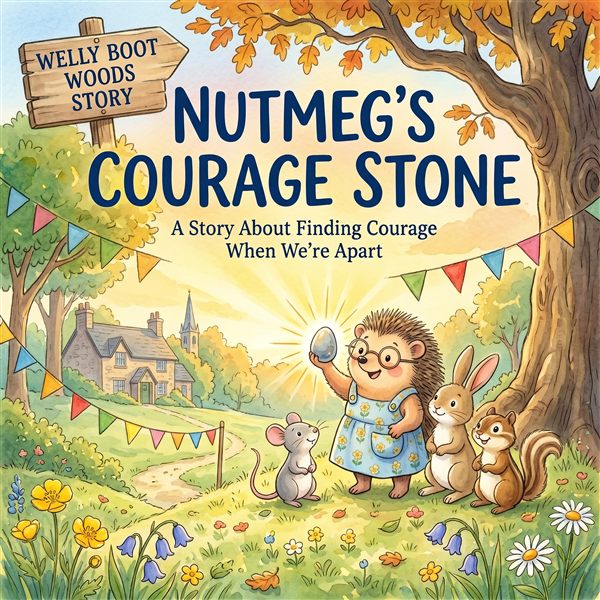
Nutmeg's Pocket Hug (Book 4)
Nutmeg the little hedgehog is nervous about leaving her family burrow for the big woodland school. Her mother gives her a smooth "Pocket Hug" pebble to keep in her coat pocket. The perfect comforting read for easing morning goodbyes, calming drop-off tears, and building everyday courage.
6. Frequently Asked Questions
Toddlers do not possess adult time concepts. When parents rush with urgency ('Hurry up, we are late!'), the toddler's nervous system detects stress as a threat. Furthermore, dressing signals the impending departure from home comforts to nursery, triggering underlying separation anxiety. Connecting first and giving two simple clothing choices defuses this defensive reflex.
Avoid entering a physical tug-of-war. Instead, use a playful challenge: 'Do these boots jump like Humphrey Hare or stomping Barnaby Badger today?' You can also pack their shoes into the buggy or car and put them on once you arrive at nursery when the initial resistance has passed.
A transitional object bridges the physical gap between parent and child. In Nutmeg's Pocket Hug, Nutmeg carries a smooth stone in her coat pocket that holds her family's love. Touching the pebble gives toddlers a concrete tactile reminder of safety while they navigate the transition from front door to classroom.